
Conway City Directory Holdings
Conway's historical name records sit in several places. The Faulkner County Museum, UCA Archives, the Faulkner County Library, and national collections each hold a piece. Only catalog-confirmed years appear in the list. No complete run is claimed. The museum reports city directories and telephone books from the 1920s forward, while UCA catalogs a few exact items. Ask each keeper about missing years before planning a visit to the county.
| Collection | Confirmed years | Where held | Access route |
|---|---|---|---|
| Conway telephone books | 1920s onward; gaps unknown | Faulkner County Museum | In-person research; call ahead |
| Conway city directories | Selected years; 1961 evidence | Museum and UCA Archives | Verify the physical item before visiting |
| Southwestern Bell directory | 1945 | UCA John L. Ward Collection | Appointment, Box 8 File 38 |
| ASTC and Hendrix student directory | 1933-1934 | UCA Archives, SMC 1729 | Appointment |
| Federal census schedules | 1900-1950 useful local run | NARA and HeritageQuest | Online or library database |
| Conway Sanborn maps | 1886-1948 selected editions | Library of Congress | Digitized images as available |
Publishers, gaps, and the final printed year remain open. A physical shelf check is the honest answer. Assume every telephone book is alphabetical. Its own contents must confirm a reverse criss-cross section, meaning an address-first list arranged by street rather than by name.
The Faulkner County Library genealogy database page lays out the online research path through the library system.
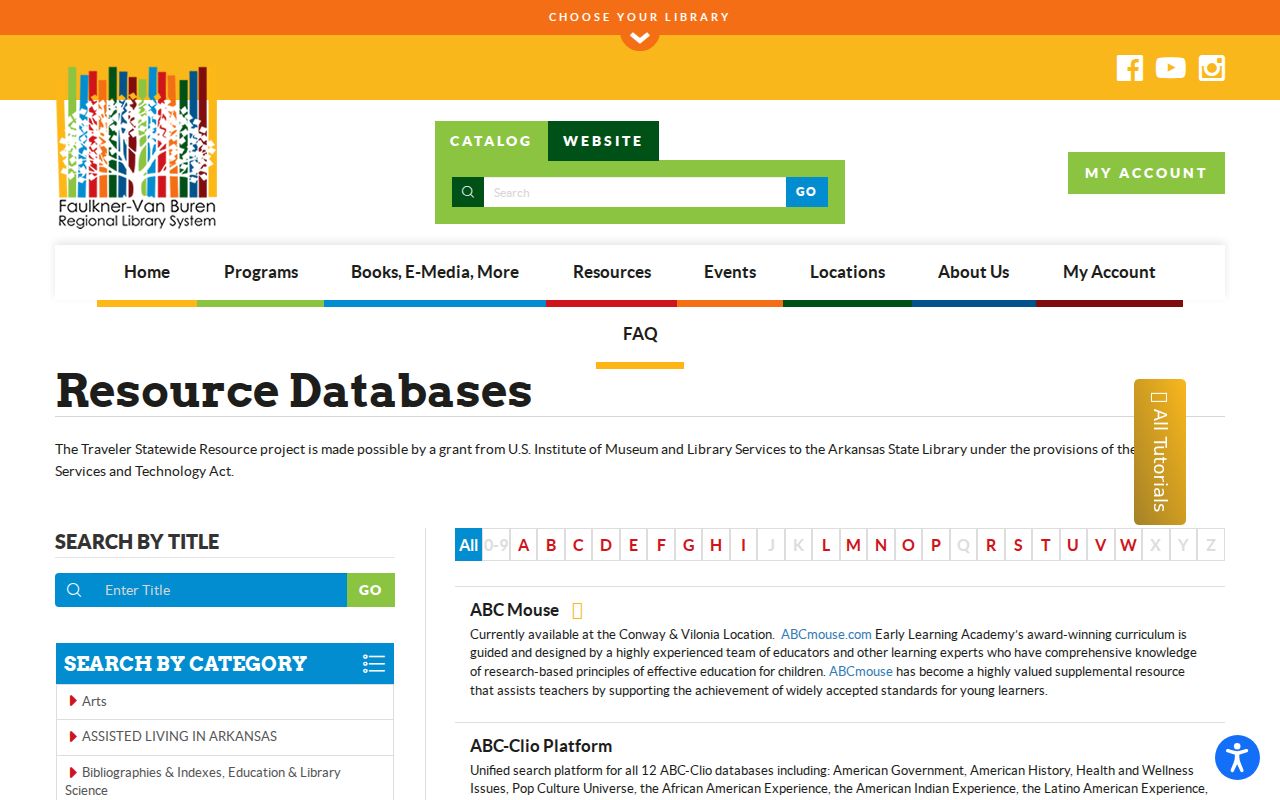
Its HeritageQuest access works best beside the local shelves. Census records can test the household clues found in a Conway directory entry.
Conway Directories Inside the Jail
Conway's best city directory story starts in an unlikely building. The Faulkner County Museum occupies the 1896 jail on the old courthouse grounds off Locust Street. It welcomes family and local-history research. The holdings reach well past directories. Telephone books, selected city directories, and school yearbooks sit alongside the Doolin and Roller-McNutt funeral-home files, obituaries, family histories, surname files. Two large studio-photo collections round out the shelves. That range is the point. One name can travel from a directory listing to a funeral record or portrait. It never has to leave the building.
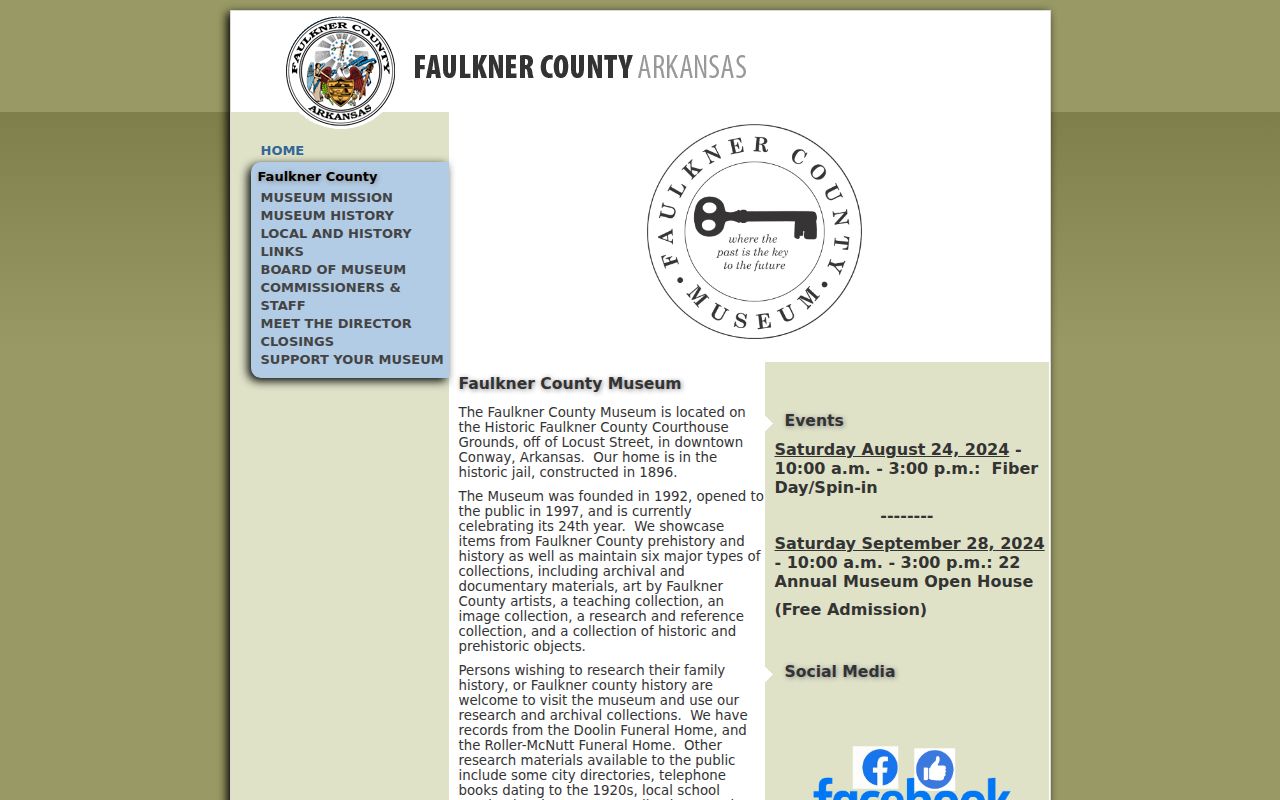
The museum image marks the right access point. A call to 501-329-5918 should come first. Name a surname, a likely decade, and a source type. Staff can then steer a visitor toward a city directory, telephone book, yearbook, obituary file, or funeral-home file as the better starting place.
A missing name proves nothing. The household may have lacked a telephone, used initials, appeared under a spouse, or fallen in a year the museum does not hold. Conway researchers value these mixed sources because each one covers a different kind of silence.
Request Conway Directory Items Precisely
UCA Archives catalogs the 1945 Southwestern Bell Conway telephone directory in the John L. Ward Collection. More Conway material follows there. Three copies of a 1961 Conway City Directory preface sit in Pamphlet Collection PAM 371, and the 1933-34 joint Arkansas State Teachers College and Hendrix student directory sits in SMC 1729. Cite the call numbers. They turn a broad request into boxes staff can identify.
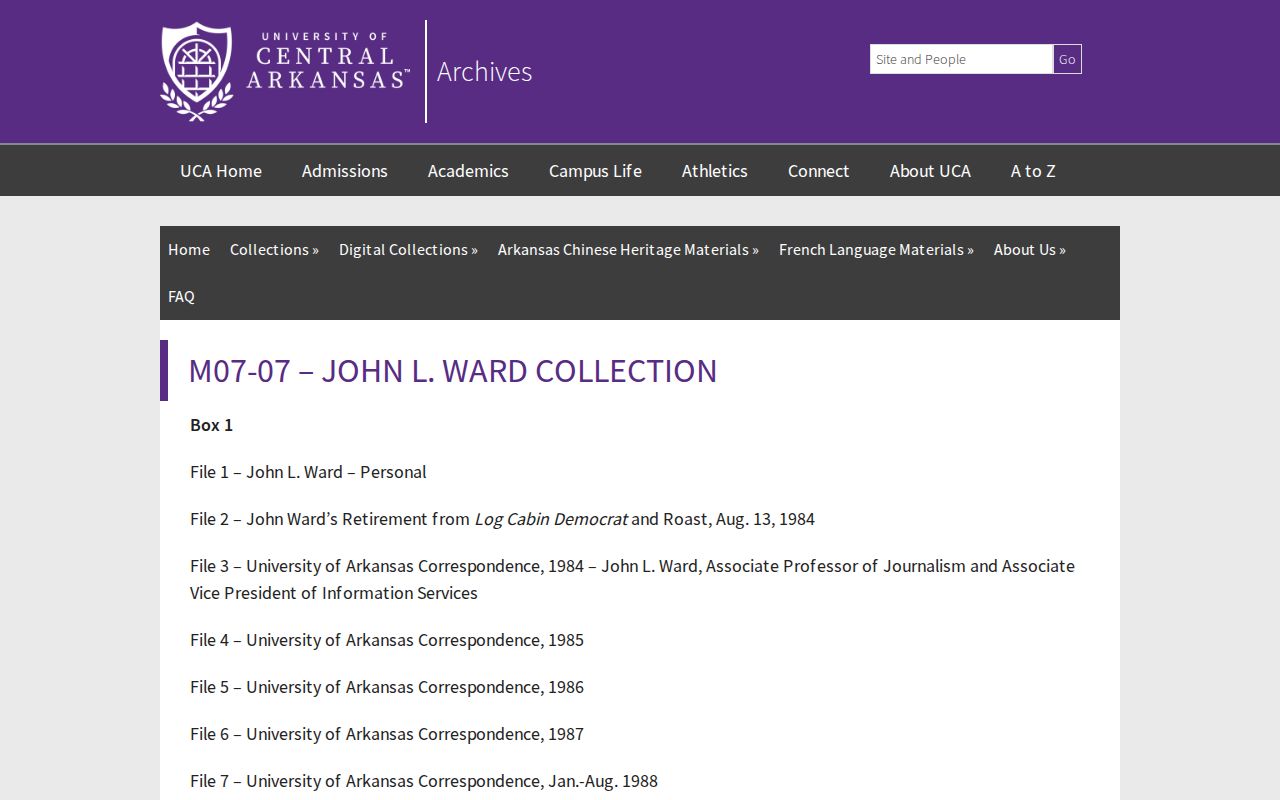
A catalog record proves a real volume. It also gives an exact box location, though it cannot promise that every year survives or that the telephone directory holds a street-order section.
UCA Archives is in Torreyson Library. The address is 201 Donaghey Avenue. Visits require appointments. A first reference appointment identifies material, but staff do not pull boxes then, so a later research appointment is needed and each visitor registers with photo identification. Email archives@uca.edu or call 501-450-3418, cite the collection and box, and name the family, street, or institution being traced in Conway.
Decode a Conway City Directory
No digitized Conway resident entry stands as an authoritative model, so claims about local abbreviations would be unsafe. Photograph the title page first. Copy the abbreviation key too. Then inventory what the volume prints. Older directories compress several facts into one line, and a small mark can change the meaning of an address or household relationship.
| Name | Surname, given name, and initials exactly as printed |
|---|---|
| Family clue | Spouse in parentheses or widow notation, if the volume uses it |
| Work clue | Occupation and employer, when present |
| Place clue | Residence street and number, plus any business address |
| Status mark | Householder or owner-renter symbol only after checking the key |
| Cross-reference | Alternate name, firm, or another place in the volume |
- Criss-cross directory
- An address-first section arranged by street. Its existence must be confirmed in the physical Conway volume.
- Householder index
- A list centered on the person responsible for the household rather than every occupant.
- Abbreviation key
- The volume's own legend for short forms and symbols. It outranks a key copied from another city's book.
Search initials, nicknames, spouse names, and adjacent years. A widow note may tie a married entry to a later household. Names repeat across Faulkner County. The same surname can belong to unrelated families, so an address or institution makes a better match key than a name alone.
Map Conway Directory Addresses
Maps give Conway directory addresses context. UCA preserves city maps for 1925, 1930, 1952, 1961, 1976, 1980, and 1984, plus subdivision maps from 1979 and 1983. The B.G. Wilson map became official in 1917. It was recorded in Town Plats A, page 46 and following. That map bridges street changes between editions of the city directory.
| Year or span | Conway directory-history marker |
|---|---|
| 1873 | Faulkner County was created, setting the county-era records context. |
| 1886 | First confirmed Conway Sanborn edition in the local sequence. |
| 1917 | B.G. Wilson map adopted and recorded as Conway's official city map. |
| 1920s onward | Telephone-book floor confirmed by the County Museum. |
| 1933-1934 | Joint ASTC and Hendrix student directory preserved at UCA. |
| 1945 | Southwestern Bell Conway telephone directory cataloged at UCA. |
| 1961 | Conway City Directory preface brochures survive in Pamphlet Collection PAM 371. |
Photographs help too. The digitized Faulkner County Historical Society photograph collection offers views of downtown trade, churches, transport, schools, and early civic life in Conway.
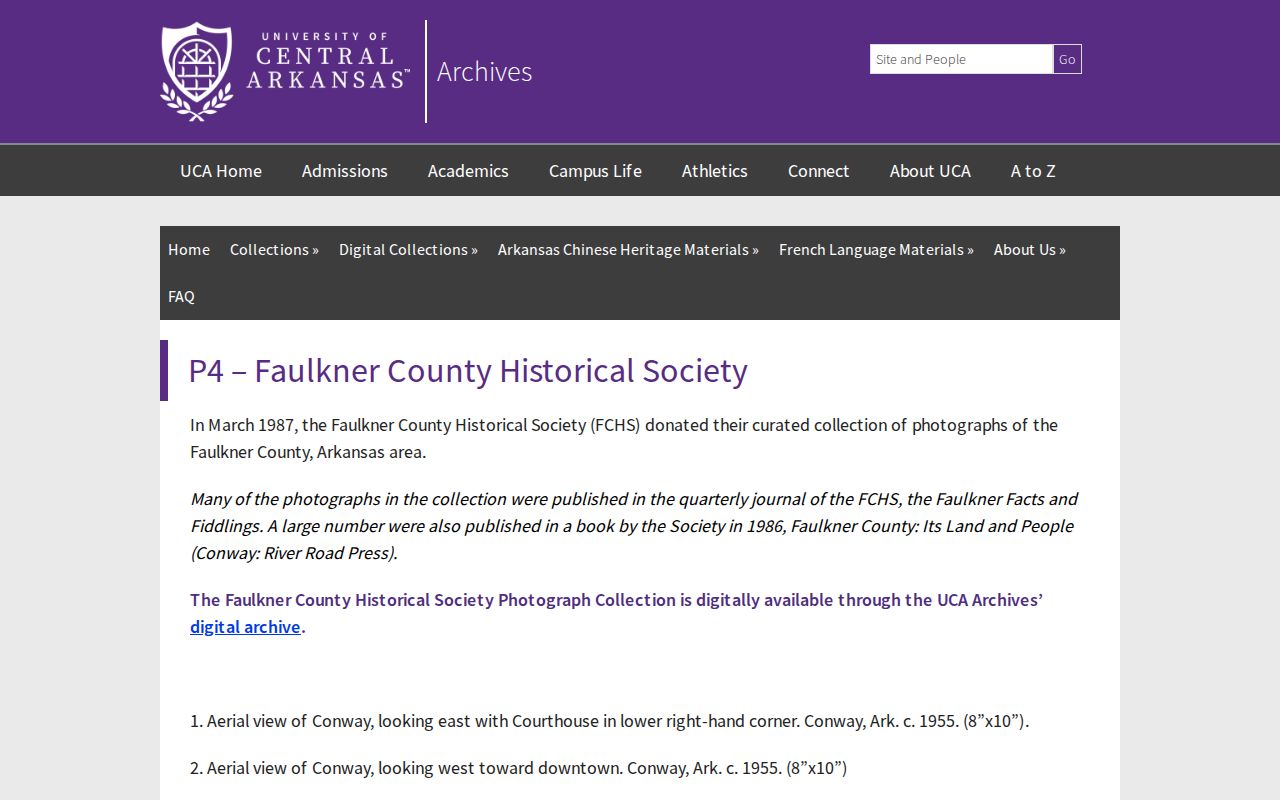
A dated photograph can identify an employer, storefront, or institution abbreviated in a Conway listing. It supports the directory evidence. It does not replace the printed entry or recorded land record.
Eight Sanborn editions cover 1886 through 1926. They show footprints, street names, numbers, construction materials, and use. They list no residents. Their value is geographic. A map can show whether an address existed, whether a building changed, and why a later city directory prints a different number.
Conway's City of Colleges Rolls
Colleges built Conway's paper trail. UCA, Hendrix College, and Central Baptist College each produced yearbooks, campus papers, faculty lists, and institutional maps. A campus roster can place a person in a school community when no Conway household directory survives for that year. The 1933-34 joint ASTC and Hendrix directory shows that pattern in a single printed volume. Use only public archive material.
The Conway branch of Faulkner County Library bridges the two.
The library opened as a city institution in 1935. County support arrived after a 1954 tax. Today it offers reference help, HeritageQuest census images, and digitized genealogy books. Faulkner or Van Buren County residents can get a card with photo identification and proof of a current mailing address. A nonresident annual card costs $20.
Treat campus and library sources as companion rolls. A yearbook caption, a directory address, and a census household form a far stronger match than any single name hit, since they show affiliation and public history rather than a proven private residence.
Extend Conway Directory Clues
Local indexes deepen a Conway lookup. The Faulkner County Historical Society publications open the door. Faulkner Facts and Fiddlings works as a name and topic gateway. The 1986 Faulkner County: Its Land and People and the indexed 2021 Revisited edition both carry biographical leads, while a cemetery census published in 1990 recorded active and inactive county burial grounds as of the end of 1987.
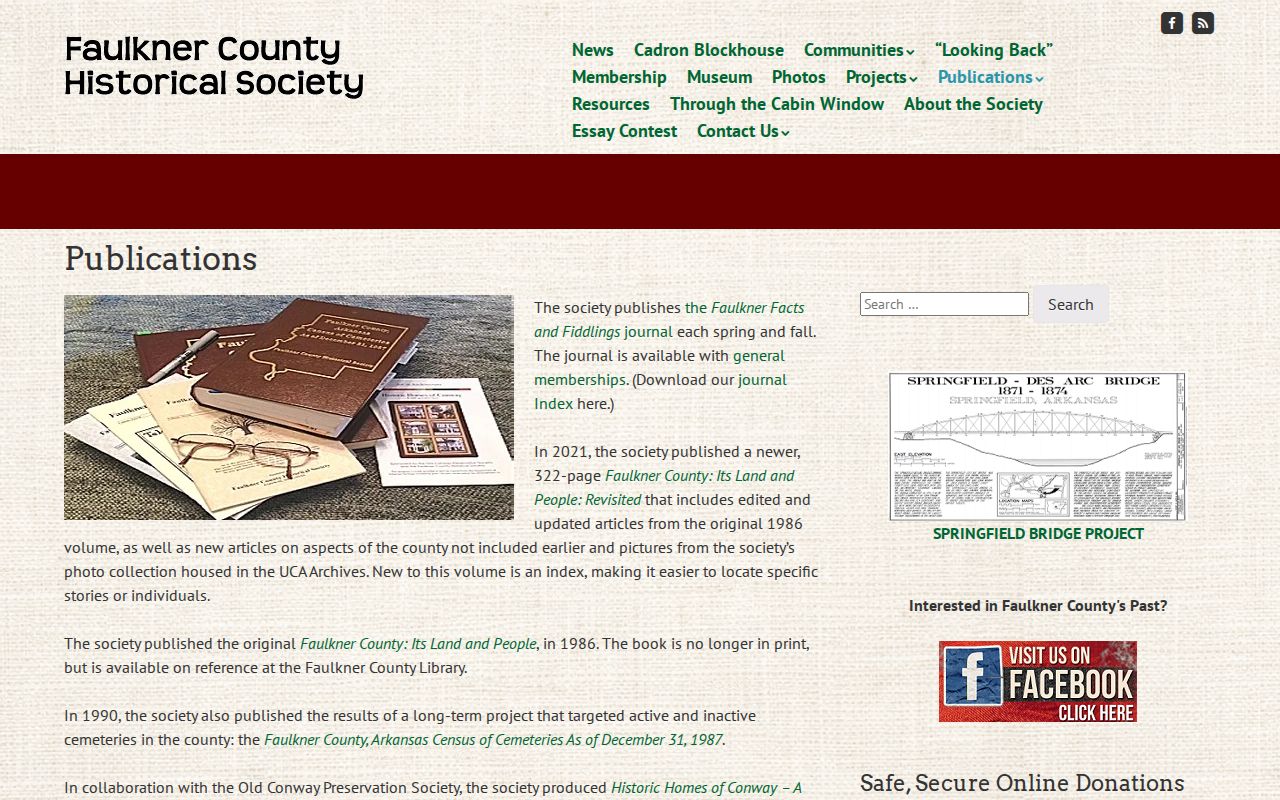
City directory leads often open doors beyond the volume itself. A name, church, trade, cemetery, or family tie spotted in a Conway directory can be chased through other local records. The historical society keeps no staffed research room of its own. Instead, it points detailed researchers to the Museum, the Library, and its own resource list. So plan any visit around the actual keeper of the materials.
Funeral-home files and obituary collections can close the trail when a resident drops out of a later volume. Probate estate papers held at UCA run from 1873 through 1917. They may name administrators or heirs. Each source adds its own layer of proof. A narrative family history might hint at a kinship. But a probate file or a census entry gives a firmer record to test that hunch against.
Trace Families Through Conway Directories
A sound household trail moves slowly across the years. Federal census schedules through 1950 add relationships and household members that an alphabetical Conway directory may leave out. The 1890 population schedules are largely lost nationwide. Around that gap, directories, tax records, maps, probate papers, and newspapers carry extra weight.
- Locate the surname in a confirmed Conway volume and copy the entry exactly, including initials, spouse notes, symbols, and address.
- Check adjacent available years. Record every change rather than assuming two forms refer to different people.
- Compare the closest public census schedule through HeritageQuest or the National Archives. Test age, spouse, household members, and place.
- Place the address on a Sanborn or UCA map. If a reverse section exists in that volume, inspect the street and nearby entries.
- Follow a disappearance through obituaries, funeral-home files, probate papers, later maps, or a deed. A move, death, renumbering, or unlisted phone can all explain it.
Modern searching follows a different track. The Conway street directory keeps today's parcel and street workflow apart from the historical shelf. A historical edition proves only what one volume printed. It cannot establish ownership alone. Nor does a single directory confirm continuous residence or every person who shared the home. Pair each Conway entry with a deed, census line, or voter roll before drawing conclusions.
Note: Keep the source title, year, page, repository, and call number with every Conway city directory transcription. Another researcher can then retrace the evidence.